
How to Book China Train Tickets (High-Speed Rail, 2026)
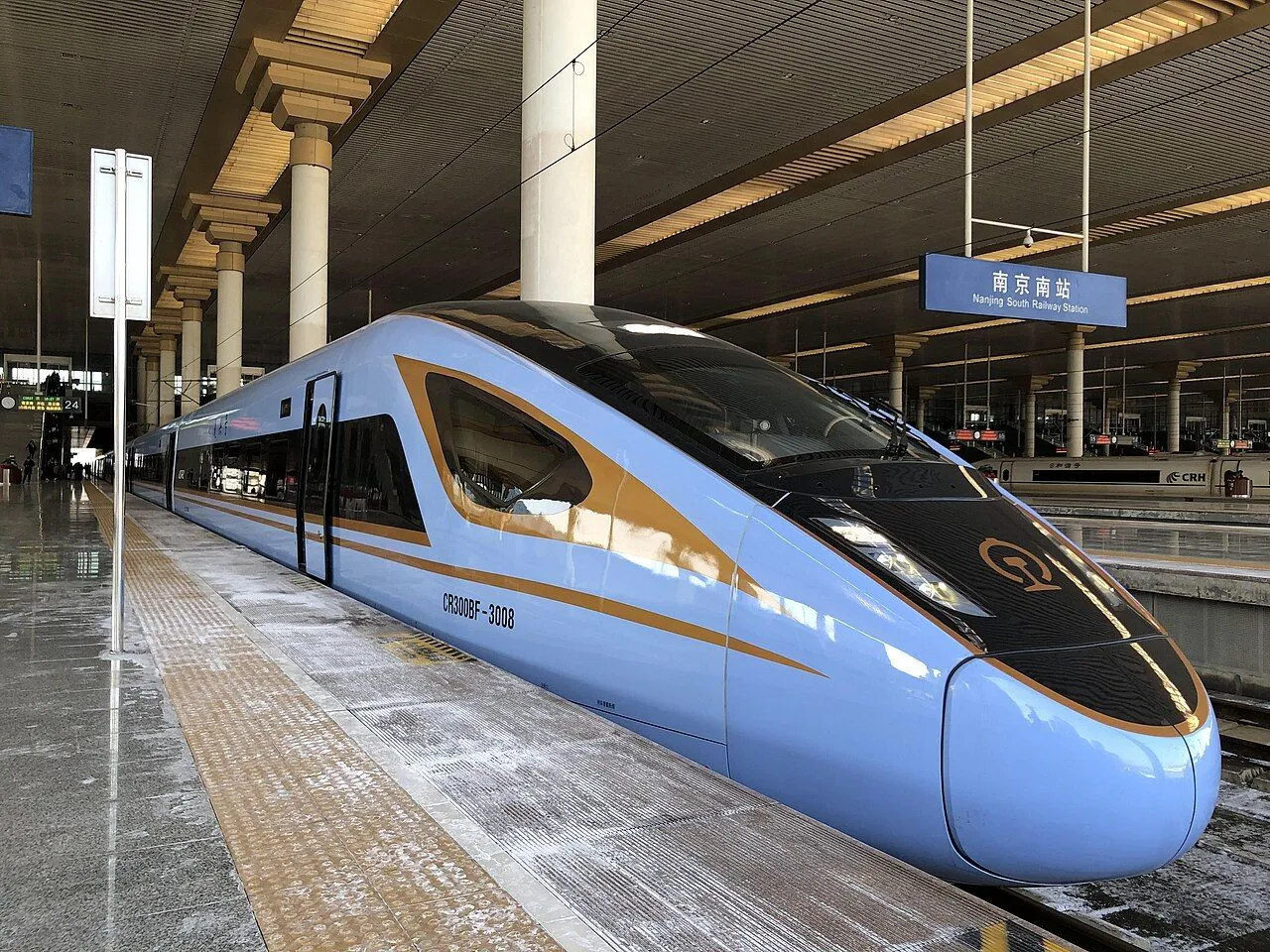
China’s high-speed trains reach 97% of cities with an urban population of 500,000+ and run at up to 350 km/h. In most big-city stations the metro is downstairs in the same building. Booking on the official 12306 app is mostly smooth in 2026.
Your two booking options
| Official 12306 | Third-party (Trip.com, Klook) | |
|---|---|---|
| Language | English app & website | Full English |
| Foreign passport | Supported (needs verification first) | Smooth, no verification |
| Phone number | Any number (foreign OK) | Any phone number |
| Identity verification | Required once (usually automated, minutes) | Not required |
| Booking fee | None | ~¥15–30 per ticket |
| Payment | Alipay, WeChat Pay, UnionPay, Visa/Mastercard/JCB/Diners | International cards, PayPal |
| Best for | Most travellers (recommended) | Booking >15 days ahead, card-decline fallback |
Option A: Book on 12306 (recommended — zero fees, smooth in 2026)
12306 is China’s official railway ticketing platform. It sells every ticket at face value with zero booking fees. The one-time passport verification that used to be the sticking point is now largely automated — most foreign passports clear within minutes to 24 hours, so the whole setup takes about 20 minutes. For most travellers in 2026, this is the better default. Here’s the full process:
Step 1 — Download the app and switch to English. Search “12306” on the App Store or Google Play (publisher: China Railway). The app opens in Chinese by default — tap the “Me” tab → settings icon (top-right) → Language Settings → English.
Step 2 — Register an account. Tap “Register” and choose “Foreign Passport” as your document type. Enter your name exactly as it appears on your passport (surname first, then given names — match the machine-readable zone at the bottom of your passport page). Add your passport number, nationality, date of birth, and an email address. Enter any phone number you control — a foreign number with its country code works fine; a China number is not required. You’ll receive a verification SMS with a code.
Step 3 — Activate by email. 12306 sends an activation link to your inbox (check spam if you don’t see it within a few minutes). Click it to activate the account.
Step 4 — Complete passport verification (the gatekeeper step). Before you can buy tickets, 12306 must verify your identity. Three options, fastest first:
- Automatic check — the system compares your registration data against immigration records. Usually clears within minutes to 24 hours. Check status under Me → Personal Information.
- Online manual review — if automatic verification fails (common with foreign names), upload a clear photo of your passport information page. Manual review takes 3–5 business days.
- In-person at any station — bring your original passport to any railway station ticket window and ask for identity verification. Usually completed within 10 minutes, and your account is ready immediately.
Register and verify the moment you book your flights to China — not the day before you travel. An unverified account can browse trains but cannot check out. Name mismatches (wrong order, missing spaces, extra punctuation) are the #1 cause of failed verification.
Step 5 — Search and book. Enter your departure city, destination, and date. Trains are prefixed: G (high-speed, up to 350 km/h), D (up to 250 km/h), C (intercity), Z (direct sleeper). Tickets go on sale 15 days before departure — set a reminder in the app so you don’t miss the opening window during holidays.
Your ticket names a specific station, not just a city. Beijing has eight: Beijing, Beijing South, Beijing West, Beijing North, Beijing Chaoyang, Beijing Fengtai, Qinghe and Beijing Tongzhou. Put the exact name into [Amap or Apple Maps](/guides/google-maps-china/) and into [Didi](/guides/does-uber-work-in-china/). The two legs on a first [Beijing–Xi'an–Shanghai trip](/guides/china-10-day-itinerary/) are Beijing West → Xi'an North and Xi'an North → Shanghai Hongqiao.
Step 6 — Pay. 12306 accepts Alipay, WeChat Pay, UnionPay, and international cards (Visa, Mastercard, JCB, Diners Club). American Express is not accepted. Alipay/WeChat Pay are the most reliable; foreign-card declines still happen on 12306. If your card is rejected, book that leg via Trip.com instead.
Step 7 — Board. Your e-ticket is linked to your passport. At the station, scan your passport at the automatic gate. If the gate can’t read it, use the staffed manual channel (allow 10 extra minutes).
Option B: Book via Trip.com (when 12306 doesn’t fit)
- Open the Trip.com app or website, switch to the English interface.
- Search your route. You’ll see the same trains as 12306, plus the trip price (fare + a small booking fee of ~¥15–30 per ticket). Trip.com also lets you reserve before 12306 opens sales (from ~60 days out) — it auto-purchases the moment seats are released, which removes the 15-day wall for fixed itineraries.
- Enter your passport details. No China phone number needed, and no identity verification — Trip.com handles the 12306 verification on the back end.
- Pay with Visa, Mastercard, Amex, JCB, PayPal, or Apple Pay.
- Your e-ticket arrives by email/app. Scan your passport at the gate as usual.
The trains and fares are identical — Trip.com doesn't hold special inventory. You're paying the fee for three real advantages: payment almost never fails, you can lock in a popular route before the 15-day window opens, and you get English-language support if something goes wrong.
Which seat class should you book?
| Class | Layout | Typical price | Good for |
|---|---|---|---|
| Second (二等座) | 3+2 | baseline | The default — what ~90% of tourists book; comfortable up to 4–5 hours |
| First (一等座) | 2+2 | ~1.6× second | No middle seat, footrest, free snack and water — worth it on 3+ hour rides |
| Business (商务座) | 1+2 or 1+1 | ~3× second | Lie-flat seat, lounge access, free hot meal — a treat, not a necessity |
Seat letters work like on an aircraft: A and F are window seats, C and D are aisle, B is the middle (second class only) — and there is no “E”. Every G/D/C train has power sockets at the seats, so a four-hour ride doubles as a charging session; bring a Chinese three-pin adapter since built-in USB is still rare.
Second class on a Chinese G train is closer to international economy-plus than to a budget airline — genuinely fine for a whole day of travel. Book first or business when you want guaranteed quiet (2+2 means no one sits next to you) or a lie-flat for a very long journey.
At the station: security, the hall, the gate
China’s big stations are airport-sized, so give yourself time. The official advice is to arrive about an hour before departure at major hubs (30 minutes is the absolute floor) — add more during holidays.
- Security screening. Every station screens everyone: bags through an X-ray, you through a metal detector. Unlike at airports, full bottles of water and food are generally fine to carry — but leave the pocket knife at home: blades longer than 6 cm (scissors included) get confiscated at the checkpoint.
- The waiting hall. Find your train number (e.g. G123) on the giant departure board — next to it is your gate number (检票口). Go to that gate and wait nearby. Gates typically open 10–20 minutes before departure.
- The gate closes early. Boarding stops 3 minutes before departure, and trains occasionally pull out a minute or two early — treat the printed time as a hard deadline. The board shows green (boarding), yellow (waiting) and red (closed). If it’s red, don’t force the barrier — go to the ticket office and ask about the next train.
Boarding: no paper ticket needed
Since 2020, all high-speed rail in China is paperless. Your e-ticket is linked to your passport number — there’s nothing to print or collect.
- Automatic gates: most major stations have passport-scanning gates. Place your passport on the scanner and walk through.
- Manual channel: if the gate can’t read your passport (or you’re at a smaller station), look for the staffed lane marked with a person icon. Show your passport and booking confirmation. Allow 10 extra minutes.
- Self-service machines: only accept Foreign Permanent Resident ID Cards (not standard foreign passports). If you have a regular passport, skip these and use the staffed counter.
- Keep your passport accessible — you’ll need it at security screening, ticket check, and sometimes when exiting at your destination.
Changes and refunds (2024–2026 rules)
Rules below are the official 12306 tiered structure, effective since January 2024:
Refunds (退票):
| Time before departure | Fee |
|---|---|
| 8+ days | Free |
| 48 hours – 8 days | 5% of fare |
| 24 – 48 hours | 10% of fare |
| Less than 24 hours | 20% of fare |
Refunds go back to your original payment method.
Changes (改签): Each ticket allows one change only. The fee depends on when you change and which direction you move the date:
| Scenario | Fee |
|---|---|
| 48+ hours before departure (same date or earlier train) | Free |
| 24–48 hours, changing to a later date | 5% |
| Less than 24 hours, changing to a later date | 15% |
| After departure, same-day change | Free |
| After departure, changing to next day or later | 40% |
The fee is calculated on the lower of the old and new ticket prices. After a change, the ticket can still be refunded (at the applicable rate), but tickets changed after departure cannot be refunded.
During Chinese holidays — Spring Festival, National Day (Oct 1), Labour Day (May 1) — tickets sell out within minutes of release (15 days before departure). Use the app's pre-fill and reminder features: set up your passenger info and seat preference before the sale window opens, then submit the instant tickets go live. If you miss out, add a "候补" (waitlist) order immediately — 12306 auto-assigns cancelled tickets in queue order.
Frequently asked questions
Can foreigners book China train tickets with a foreign passport?
Yes. Both the official 12306 system and third-party platforms like Trip.com accept foreign passports. 12306's English app lets you register with an email address and a foreign phone number (with country code) — a China number is not required. You will need to complete passport identity verification before your first booking.
Do I need to print a paper ticket?
No. Since 2020, all high-speed rail in China is paperless. Your e-ticket is linked to your passport number — just scan your passport at the station gate. If the gate can't read your passport, use the staffed manual channel. Most big stations have the metro downstairs.
Can I change or refund a high-speed rail ticket?
Yes. Refunds: free if cancelled 8+ days before departure, 5% (48h–8d), 10% (24–48h), or 20% (<24h). Changes: free if made 48+ hours before departure (for same-date or earlier trains); a graded fee of 5%–40% applies for changes to later trains within 48 hours. Only one change is allowed per ticket.
Does 12306 require a Chinese phone number?
No. You can register with an email address and any mobile number that receives SMS codes, including a foreign number with its country code. A China number is convenient but not mandatory.
Should I use 12306 or Trip.com?
In 2026, use 12306 by default — registration and passport verification are fast (usually minutes to 24 hours), most international cards work, and there are no booking fees. Fall back to Trip.com if your card is declined on 12306, if you want to reserve a route more than 15 days before departure, or if you'd rather have English-language support.
How long does 12306 passport verification take?
It's often automated and clears within minutes to 24 hours. If the automatic check fails (common with foreign names), you can upload a photo of your passport information page for manual review (3–5 business days) or visit any station ticket window for instant in-person verification.