
Great Wall of China: Mutianyu, Badaling, or Somewhere Else?
Checked . Mutianyu hours and real-name rules are from the official Mutianyu site. Admission and cable-car prices move; treat the figures below as 2026 typical, not a live quote.
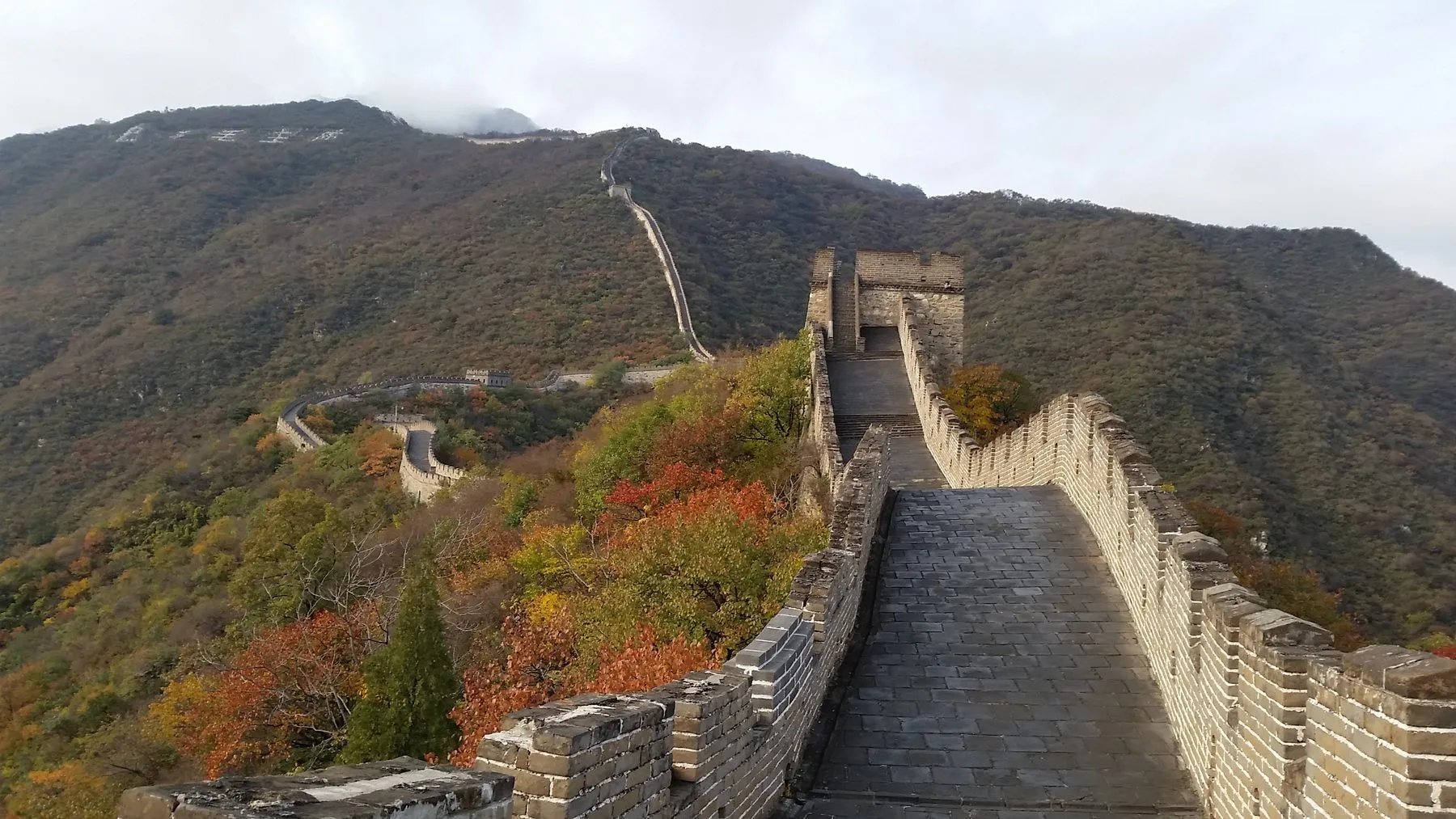
The Wall you want is a ridge, not a crowd. From Beijing, that ridge is Mutianyu (慕田峪): restored, a cable car, enough English to get through the gate, and not the stretch every coach from the city dumps at 10:00.
Badaling (八达岭) is closer. That is the problem. The new Jingzhang trains put it 20–30 minutes from Beijing North, so school groups, domestic tours and the “不到长城非好汉” (“not a hero until the Wall”) photo queues all go there.
There are other sections — Jinshanling, Simatai, Juyongguan, a lakeside stretch at Huanghuacheng, unrestored Jiankou. They are real options. They are not the Wall day on a first 10-day trip. On the Beijing–Xi’an–Shanghai itinerary, Day 3 is Mutianyu. Jinshanling is a hiking day that itinerary does not have.
Which section
| Section | From central Beijing | What it is | First trip? |
|---|---|---|---|
| Mutianyu 慕田峪 | 1.5–2 h by car | Restored ridge, cable car to Tower 14, optional toboggan at Tower 6 | Default |
| Badaling 八达岭 | ~20–30 min HSR; 1–1.5 h by car | Closest famous stretch, heaviest crowds, cable car | Tour already booked, or a short morning |
| Jinshanling 金山岭 | 2–2.5 h | Hiking and photography; wilder than Mutianyu; fewer people | Second Wall day, or you came to hike |
| Simatai 司马台 (+ Gubei 古北水镇) | ~2.5 h | Night wall + rebuilt water town; steep; cable car | Overnight; you want the lights, not a hike |
| Juyongguan 居庸关 | ~1–1.5 h | Restored pass in a valley; steep; fewer postcard ridges | Only if you must stay close and refuse Badaling |
| Huanghuacheng 黄花城 | ~1.5–2 h | Wall in a reservoir | Summer / second visit, not the classic ridge |
| Jiankou 箭扣 | ~2 h + scramble | Unrestored, exposed | No as DIY |
Two sections in one day is how people remember the jade shop, not the wall.
Mutianyu (the default)
Northeast Beijing, Huairou District. The walkable stretch is watchtowers 1–20. The official easy route is the enclosed cable car to Tower 14, a short walk to Tower 15, then back down the same car. The worthwhile extra is the climb toward Tower 20 — steeper, fewer people, the ridge photo. Then the same cable car down.
Do not sleep out here. A “Great Wall hotel” costs you every other Beijing hour. Stay in Qianmen or Sanlitun and treat this as a day trip.
Tickets (real-name, passport)
Mutianyu is real-name. Book on the official English site with the name and passport number exactly as printed. One ticket per passport per day. Carry the original passport. Foreign visitors do not need to swap the booking for a paper ticket.
The booking window has been 15–30 days out, depending on which official page you read. Weekends, Golden Week and autumn colour: book as soon as the date appears. If the official checkout rejects a foreign card, pay with the Alipay you already linked, or use Trip.com as backup — same passport details, same official gate, not a hutong QR.
Typical 2026 on-site stack (adult):
| Typical | |
|---|---|
| Admission | ¥45 |
| Scenic shuttle (parking / village → gate, ~3 km) | ~¥15 return |
| West cable car to Tower 14 | ¥100 one way / ¥140 return |
| Common package: admission + shuttle + cable return | ~¥200 |
| East chairlift / toboggan at Tower 6 | sold separately; combo often ~¥140 |
The shuttle is not optional unless you like a long uphill walk before the wall. Cable-car tickets and chairlift/toboggan tickets are different companies — they do not mix. Cable-car bookings enter at the north gate; chairlift/toboggan at the slide gate.
Refunds on unused reserved tickets are usually allowed until 24:00 on the visit day on the official platform. After that, the ticket is dead.
Hours
Peak season 16 March–15 November: 07:30–18:00 weekdays, 07:30–18:30 weekends. Off-peak 16 November–15 March: 08:00–17:30. Ticket sales stop one hour before close; gate checks stop 30 minutes before. Night wall (towers 10–15) is a separate seasonal product — do not count on it unless you booked that ticket.
On the wall
- Shuttle from the village / car park to the gate.
- Cable car to Tower 14. That is the viewing platform used for official visits — the postcard is here, not at the gift shop.
- Walk west toward Tower 20 if legs and weather allow. Turn around when it gets stupidly steep, not at a quota of towers.
- Same cable car down. Leave the ridge by mid-afternoon.
Chairlift up and toboggan down from Tower 6 is the extra, not the plan. Dry days only — no ice, not if you have a bad knee, and not if anyone is 60 or over (they ask). Want both? Buy a one-way cable ticket and a one-way slide, not a cable return. Wear shoes with grip. The wall is stairs, wind, uneven brick and no shade. Leave suitcases at the hotel.
Toilets exist at the village and near the cable stations; they thin out on the wall. Food at the base is tourist-park food — eat in the city or pack water and a bun. Tap Alipay; keep a little cash as dead-phone backup.
How to get there
Door to gate is 1.5–2 hours from Qianmen or Sanlitun — longer in Friday rain. You need live data and a destination pin in Chinese. In Amap / Didi: 慕田峪长城.
Two or more people — Didi both ways. Express or Premier. Typical ¥200–350 each way from Sanlitun or Qianmen; check the quote, do not treat that as a fare table. Round trip for two often beats four tour tickets and a jade-shop stop. Book the return when you come down; dusk surge is real. If the driver tries to convert the booked drop-off into a wait-all-day deal — “no one will take you back” — cancel and order another. Plenty of cars sit in the car park. Drivers confirm you by the last four digits of the booking number, same as any Didi ride. Follow 网约车 signs in the car park, not someone with a laminated card.
Solo — do not default to a ¥400–700 round-trip car. Cheaper path:
- Metro to Dongzhimen (东直门).
- 916 Express (916快) from the Dongzhimen transport hub to Huairou Beidajie (怀柔北大街) — about an hour. Take the express, not the slow 916 next to it.
- Local H23 / H24 (and other H-lines the official site lists) toward Mutianyu, or a Huairou taxi / Didi for the last leg. H-lines are infrequent; a taxi from Huairou is the reliable solo finish.
- The last 916 Express back toward Dongzhimen is early evening (often around 18:30–19:00 — check the board). If you miss it, take Didi from the wall — that is why Alipay needs to work.
There is also a Dongzhimen tourist shuttle (often ~08:30 out, ~16:30 back, pay on board, fills up). Useful if you want one vehicle and will obey its clock. It is still not a sightseeing tour.
Screenshot the hotel’s Chinese address and 慕田峪长城 before you lose signal in the hills. The Didi home pin is how you get back.
When Badaling is the honest choice
Badaling is the Wall in the textbooks. It is also the Wall with a daily cap and a queue at the 不到长城非好汉 tablet. Peak admission is typically ¥40 (1 April–31 October), ¥35 off-peak. Cable car is extra, in the same ¥100 / ¥140 band as Mutianyu.
Go here if:
- A tour already includes it and you will not fight the bus.
- You have a morning only and can use the train.
- Someone cannot do a two-hour car each way.
Do not go here because it is “the most famous.” Famous is the crowd.
Train, not the old diesel. Book 12306 to Badaling Great Wall (八达岭长城站) from Beijing North (北京北) or Qinghe (清河) — Jingzhang C/G trains, ~20–30 minutes. That station is not the S2 stop named Badaling (八达岭). From 八达岭长城站 you walk — about ten minutes to the gate, less to the cable car. You do not need a Didi. S2 from Huangtudian still runs and is cheap; it is slower, and it is easy to board at the wrong Badaling.
Tickets are real-name. Official booking is WeChat-heavy (长城内外旅游 / the Badaling account). Foreign passports: Trip.com is the practical path if the mini-program wants a Chinese ID. Weekends and holidays sell out — do not assume a walk-up window.
On site: the north route is the famous climb (toward North 8); the south is quieter. Take the cable car if stairs will blow the morning. Budget a half-day once you add the walk from the station. Combining Badaling with the Ming Tombs is how the day becomes a parking lot.
Other sections (when Mutianyu is not the job)
These are the answers to “is there something else?” — not a second default.
Jinshanling (金山岭) — the walking day
Miyun / Hebei border, 2–2.5 hours. In Amap / Didi: 金山岭长城. Adult admission is typically around ¥65; cable car extra and cheaper than Mutianyu’s.
Watchtowers packed along a long ridge: restored enough to walk without a guide, wild enough to photograph, almost no tour buses. You hike for hours — the cable car is a lift, not the visit. This is for photographers and hikers. Ordinary legs will find it tiring. Sunrise and a sea of clouds — when the weather gives you one — are why you sleep nearby. A 04:00 Didi is not the same. Do not fly for the ridge shot: the scenic area bans drones, and the visitor centre holds anything you brought. Do not plan a Jinshanling–Simatai through-hike; that crossing closed when Gubei took Simatai. Walk one, or overnight at the other.
Simatai (司马台) and Gubei Water Town (古北水镇) — the night wall
Same general direction as Jinshanling, then further into a rebuilt canal town. In Amap / Didi: 古北水镇 for the town hotels, 司马台长城 for the wall gate. Simatai by day is steep and short; the product people actually buy is the night session — cable car, a few towers, lights on the wall and the town below. Night is for looking down at the town, not hiking the steep bits; staff will turn you around after dark. Town entry and wall/cable packages are separate line items. Budget the ¥150–250 band depending on the combo; more if you stay in town (hotel guests often get a cheaper wall package).
This is an overnight. It is not “Mutianyu after dark.” The town is commercial; the night wall is the reason to pay for it. Same-day Mutianyu + Simatai is a car, not a trip.
Juyongguan (居庸关) — closest restored pass
The Wall here sits in a valley fortress, not on a postcard ridge. In Amap / Didi: 居庸关长城. Steep, closer to the city than Mutianyu, lighter than Badaling. Fine if mobility is good and you refuse both the Mutianyu drive and the Badaling crowds. Weak if the photo in your head is a dragon-spine on the skyline — that photo is Mutianyu or Jinshanling.
Huanghuacheng (黄花城) — wall in the water
Huairou, similar direction to Mutianyu, different job: reservoir, drowned wall, summer swimming when it is allowed — a designated bay, not the bricks. Still stairs. In Amap / Didi: 黄花城水长城. A second visit or a hot-weekend outing. It will not scratch the “I saw the Great Wall” itch if that means battlements on a ridge.
Jiankou (箭扣) — unrestored, do not DIY
Broken brick, exposure, no cable car, no ticket office that makes it official. Blogs still publish GPS tracks; people still get hurt. It is still Beijing airspace — a missing ticket office is not a drone permit. If you want wild wall, hire a licensed hiking outfit that is allowed on the stretch that week. Otherwise walk Jinshanling and keep your ankles.
Shuiguan (水关), next to Badaling, is a tour add-on. Skip it unless you are already on that bus.
Tours vs doing it yourself
| Do this if | Don’t | |
|---|---|---|
| Didi both ways | Two or more, Mutianyu, you want your own clock | Solo on a tight budget |
| 916 + Huairou taxi / H-line | Solo Mutianyu, you can read a bus board | Last 916 already gone |
| Dongzhimen / Qianmen shuttle | One vehicle, fixed 16:30-ish return is acceptable | You want Tower 20 at golden hour |
| Mutianyu-only minibus | Solo, no appetite for transfers, English pickup | The itinerary lists Ming Tombs + silk + tea |
| Private driver | Three–four people, or Jinshanling/Simatai timing | Paying tourist-bus prices for a sedan to Badaling |
DIY first. A Mutianyu day tour is the backup for one person who will not navigate a bus. After the official site, search English listings on Trip.com for Mutianyu (tickets or a small transfer) — Mutianyu on Trip.com. Decline anything titled “Great Wall and…” a second attraction. Those days exist to fill a coach.
Weeks to skip
Do not put the Wall on Golden Week (1–7 October), Labour Day (1–5 May), or the Spring Festival / Chunyun window. Mutianyu still beats Badaling those weeks; it does not beat staying in the city. Late March–May and mid-September–October — except those holiday weeks — are the default; best time to visit China has the month table and holiday dates. Same windows as the 10-day itinerary. August is hot; January is cold and empty enough to be worth the coat. After rain, the toboggan is a no. After a storm warning, stay in Beijing — closures are same-day.
Drones
Leave it at home. Since 1 May 2026, all of Beijing is controlled UAV airspace. You cannot fly, and you cannot pack a drone into the city — plane, train, bus or car. Jinshanling (Hebei) still bans it at the gate. Unrestored wall is not a loophole.
What to bring (and leave)
Bring: passport, charged phone, eSIM data, water, hat, sun or wind layer, shoes with grip, a screenshot of the return pin.
Leave behind: suitcases, the drone, the “Great Wall certificate” stall, and anyone in the car park who already knows your hotel.
The Wall is one Beijing day. Spend it on the ridge, not in a queue that exists because the train was convenient.
Frequently asked questions
Mutianyu or Badaling for a first visit?
Mutianyu. It is restored, has a cable car, and is not the tour-bus crush. Badaling is closer — about 20–30 minutes on the Jingzhang high-speed train — which is why every domestic group goes there. Pick Badaling only if a tour already includes it, you only have a half-day, or someone in the party cannot sit in a car for two hours.
Are there Great Wall sections besides Mutianyu and Badaling?
Yes. Jinshanling is the hiking and photography day (two-plus hours each way). Simatai is the night wall, sold with Gubei Water Town. Juyongguan is the closest restored pass — steep, in a valley, fewer postcard ridges. Huanghuacheng puts the wall in a reservoir. Jiankou is unrestored and not a first-trip DIY. None of these replace Mutianyu on a 10-day first itinerary.
Do I need to book Mutianyu in advance?
Yes — weekends, holidays and autumn colour. The official site uses real-name tickets: passport name and number, one ticket per passport per day. The booking window has been 15–30 days out; it moves, so check en.mutianyugreatwall.com when you lock the date. Foreign passports do not need a paper-ticket swap. Carry the original passport; a photo of it is not enough.
Cable car or toboggan at Mutianyu?
Cable car up and down to Tower 14 is the default. The chairlift and toboggan are on the other side, at Tower 6. They are a different company — tickets are not interchangeable. If you want the slide, buy a one-way cable ticket plus a one-way toboggan, not a cable return. Toboggan only when the slide is dry; rain, frost and maintenance shut it without much warning. Age 60 and over is turned away.
Is a tour worth it versus Didi?
Two or more people: Didi both ways. You keep your own timetable and you are not parked at a jade shop. Solo: a small transfer, or the 916 plus a Huairou taxi, is cheaper than a round-trip Didi. A Mutianyu-only minibus tour is reasonable if you do not want to navigate buses and you accept a fixed leave time. Skip any tour that stacks Ming Tombs, a silk factory and Badaling into one day.
Can I do the Great Wall as a half day from Beijing?
Door to the Mutianyu gate is 1.5–2 hours. Add tickets, the shuttle, the cable car and a walk, and you are gone from the city for most of the daylight. First-timers should treat it as a full day. Badaling by high-speed train is the only version that fits a short morning — at the cost of the crowds that train brings.
Is Jiankou or the 'wild Great Wall' a good idea?
Not on a first trip, and not as a GPS-from-a-blog hike. Jiankou is unrestored: crumbling steps, steep drops, no cable car, no reliable rescue. Access has been tightened. If you specifically want unrestored wall, go with a licensed hiking operator who holds the permits that week — or pick Jinshanling, which is restored enough to walk and still looks like a mountain ridge.
Can I fly a drone at the Great Wall?
No. Leave it at home. Since 1 May 2026 the whole of Beijing is controlled UAV airspace: outdoor flights need approval a visitor cannot get, and bringing a drone into the city — plane, train, bus or car, including transit — is banned. Mutianyu, Badaling, Juyongguan, Huanghuacheng, Simatai and Jiankou sit inside that rule. Jinshanling is in Hebei and still bans flights at the gate. Unrestored wall is not a workaround.